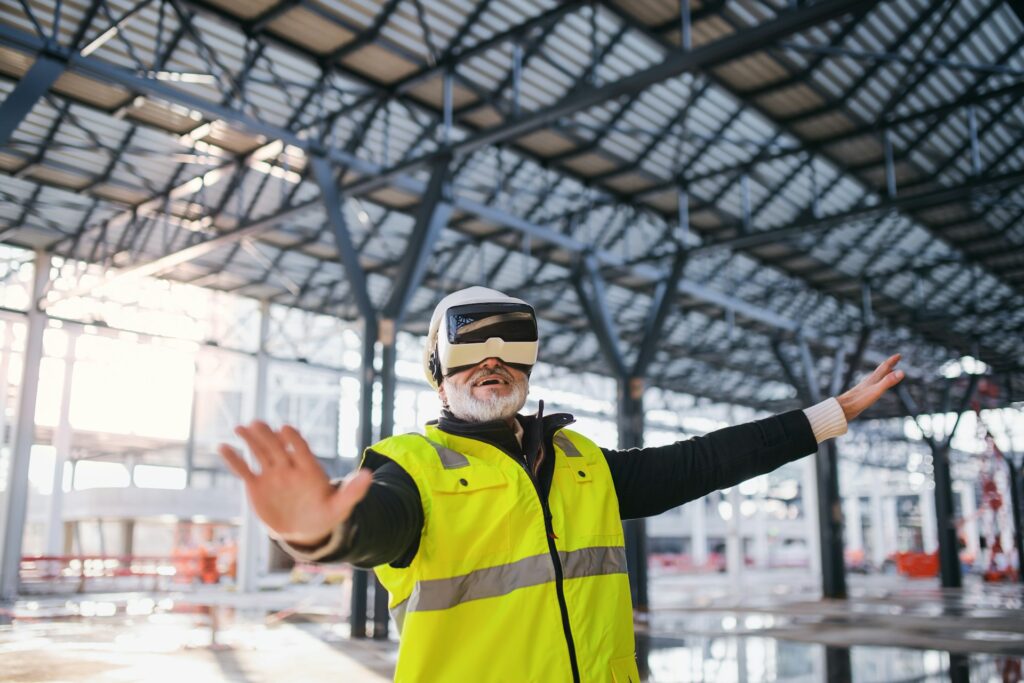
A document published by the World Economic Forum estimates that new technologies, and AI in particular, will create around 170 million jobs and wipe out 92 million before 2030, working out which jobs belong to the future is a very complex task, however it is possible to say with some degree of certainty that they will be jobs derived from the regulation of AI itself, in other words, human oversight of artificial intelligence will be the field with the most opportunities ahead, and therefore interacting with and understanding AI from now on is essential for adapting to those new job profiles.
Jobs with no name and no university
By: Gabriel E. Levy B.
The World Economic Forum’s Future of Jobs Report 2025 surveyed more than a thousand companies employing 14 million people across 55 economies around the world over several months, and its conclusion is blunt: around 22 percent of today’s jobs will change their shape or their name, or disappear altogether, before 2030.
Out of every hundred workers, 59 will need to retrain over this period and eleven of them will probably never receive that training.
The same report names the jobs that will grow the most: artificial intelligence specialists, data analysts, renewable energy engineers, nurses and delivery drivers.
But there is one detail the Forum does not resolve: its methodology can only count the jobs that already exist on the payrolls of the companies it surveyed. A job that has no name yet fits in no survey, and that is exactly where, beyond any doubt, the greatest employment prospects of the coming decades lie, that is, in jobs that do not exist yet and that nobody has even imagined.
“We are being afflicted with a new disease of which some readers may not yet have heard the name, but of which they will hear a great deal in the years to come, namely, technological unemployment. This means unemployment due to our discovery of means of economising the use of labour outrunning the pace at which we can find new uses for labour.” John Maynard Keynes, Economic Possibilities for our Grandchildren, 1930.
The precedent
Ten years ago nobody was hiring people to write instructions for language models, and today that profile, known in specialized technical jargon as the prompt engineer, appears in job postings across half the world, and the coming decade will surely repeat the pattern, only faster, although this job may well be one of the next to disappear, since it is a task AI itself will easily be able to perform.
Another paradox we cannot let pass, and one that is striking, is that 41 percent of the companies surveyed by the Forum admit they plan to cut staff wherever AI can do the work, while their executives repeat at every conference that technology will create more jobs than it destroys.
I personally believe that the public debate focuses far too much on the jobs that will disappear and far too little on who will fill the ones about to be born, and with this I do not mean to dismiss the risk, I am only suggesting that, faced with the threat, the best option may be to see the glass half full in order to meet the future with less uncertainty.
The jobs with the greatest opportunities in the coming years will be those that depend on regulatory restrictions, especially those of the European Union, which means that as regulation demands more human presence to supervise and control AI, the greater the demand will be for these specific profiles, in other words, whoever knows AI best will be the best prepared to supervise it.
These are some of the jobs that do not exist yet, but that will be the most in demand in the future.
AI talent recruiter
As artificial intelligence systems improve and agents specialize in a wide range of tasks, organizations will need to recruit the right kind of technology, and since global regulation points to this chore not being left in the hands of the machines themselves, that is, a robot will not be allowed to recruit a bot for jobs that require human oversight, the artificial intelligence talent recruiter is shaping up as one of the professions with the greatest prospects and future in the medium and long term, since it calls for people who can recognize an agent’s algorithmic profile, the training it received, its parent company and the type of server it runs on, the cost in tokens it consumes against the organization’s needs, the available budget and the kind of tasks required.
Air traffic controller for delivery drones
In August 2026, Uber announced a partnership with Zipline, the world’s largest delivery drone company, with a concrete goal: one million aerial deliveries a day in the United States before the end of 2029.
Zipline today completes one delivery every twenty seconds, around 4,320 a day worldwide. Reaching Uber’s goal means multiplying that figure by 230.
Walmart, for its part, announced in May 2026 that it had passed one million cumulative deliveries with drones from Wing, the Alphabet subsidiary, and from Zipline itself.
Nobody directs that traffic yet.
Today’s air traffic controllers handle a few thousand crewed aircraft an hour across an entire country. One million drones a day over the cities requires a new job, with new rules.
The United States Federal Aviation Administration (FAA) wrote those rules in the so-called Part 108, which would allow routine flights beyond the pilot’s line of sight, what the industry knows as BVLOS. The rule creates the figure of the operations supervisor, a human with final authority over an entire fleet they cannot see.
However, Part 108 has been stuck for months in final review at the White House, with the deadline set by President Trump himself expired since February 2026. Europe moved first with the U-space regulation, a digital system for organizing low-altitude airspace in force since 2023, although real deployments remain scarce.
In Colombia, the Civil Aviation Authority allows drone use, but routine flight beyond visual line of sight at commercial scale still depends on case-by-case permits. When mass aerial delivery arrives, the country will need controllers that no aviation school trains today.
“We are making the future of our aviation a reality and unleashing American drone dominance. From drones delivering medicine to unmanned aircraft surveying crops, this technology will fundamentally change the way we interact with the world. Our new rule will reform outdated regulations that were holding innovators back while also enhancing safety in our skies.” Sean P. Duffy, United States Secretary of Transportation.
Claims adjuster for damage caused by AI
Claims adjusting is one of the most in-demand professions in the world within the field of finance, however, none of today’s adjusters is prepared to face the challenges AI brings: who will determine liability and damages for a self-driving car, for an algorithm’s malpractice, for the crash of a data server in a hospital or a government caused by an AI agent that makes a mistake or, more seriously still, for a theft carried out by an AI programmed by unscrupulous people for that very purpose?
Space junk collector
The European Space Agency estimates that some 3,000 dead satellites are still circling the Earth, and surveillance systems track more than 36,000 objects in orbit, the pieces that break off them can collide with one another and generate thousands of new fragments, and scientists call that chain reaction the Kessler syndrome, whose outcome would be a low Earth orbit unusable for decades.
The first space junk pickup already has a contract.
The Swiss company ClearSpace signed the ClearSpace-1 mission with the European Space Agency, designed to grab a rocket adapter abandoned in orbit since 2013 with four robotic arms. Japan’s Astroscale already managed in 2024 to approach and inspect a ten-meter rocket stage with its ADRAS-J mission.
Each of these missions costs tens or hundreds of millions of euros and removes a single object, and although the business is only just being born, it is already possible to see that orbital capture operators and controlled re-entry planners will be very well paid in the near future, while we will surely see lawyers specializing in liability for space junk, since nobody yet knows for certain who pays for a dead satellite.
Artificial intelligence agent auditor
AI assistants stopped being a simple chat, companies such as OpenAI, Anthropic, Google and the rest of the sector now offer agents, programs that carry out tasks on their own: they browse websites, fill out forms, make purchases, write code and take chained decisions without a human approving each step.
At Andinalink we reported a few weeks ago the case of the OpenAI agent that entered Medicare’s statistics portal in Australia without authorization. That episode foreshadows an entire profession, since all those agents will need to be audited.
Someone will have to watch the machines that work on their own.
The European Union’s Artificial Intelligence Act requires human oversight for high-risk systems, meaning someone is needed to keep watch, but the law does not say who that human will be or what they must know, that task falls to the universities, which will have to develop these profiles in a very short time, and the profile one can begin to make out is a blend of auditing with law and some programming: someone able to review the logs of what a ChatGPT, Claude, Gemini, Grok or DeepSeek agent did, understand why it did it and certify to a regulator that it stayed within its limits, will be indispensable even before the decade is out.
The agent orchestrator will also appear, a coordinator who distributes work among dozens of autonomous programs the way a plant manager hands out shifts, and in this case the World Economic Forum already points to AI and data analysis as the fastest-growing skills, but no professional degree covers that combination yet.
Robot trainer and urban miner
Figure, Tesla, Unitree and other companies already build humanoid robots bound for factories and warehouses, those machines learn by watching people repeat movements wearing sensor suits and remote controls.
The work of those people, whom we now call teleoperators or motion data collectors, will probably be one of the mass jobs of the decade: thousands of trainers teaching robots to fold clothes or load boxes, robots that will later do those tasks without them.
The other mine is in a drawer at home.
The United Nations Global E-waste Monitor estimates that the planet generated 62 million tonnes of electronic waste in 2022 and that we formally recycle only 22 percent of it.
Those devices contain gold, copper, cobalt and rare earths, the very materials the great powers compete over.
Recovering them is called urban mining, and it requires technicians who do not yet exist as a recognized trade in almost any Latin American country.
Finally, the thread tying all these jobs together is simple: none of them appears in the curricula of Latin American universities, and almost all of them will be learned first in practice, inside the companies that invent them.
In short, the World Economic Forum is right to warn that 59 out of every 100 workers will need to retrain before 2030, but its figures only count the jobs that already exist. The jobs that will be most in demand, from the drone traffic controller to the urban miner, will be born outside the classroom. Latin America will decide in the coming years whether it trains the people who will fill those positions or whether it once again imports the talent when it is already too late.
References
- World Economic Forum. (2025). The Future of Jobs Report 2025. Geneva: WEF. https://www.weforum.org/publications/the-future-of-jobs-report-2025/
- Keynes, J. M. (1930). Economic Possibilities for our Grandchildren. In Essays in Persuasion (1931, pp. 358-373). London: Macmillan. https://www.econ.yale.edu/smith/econ116a/keynes1.pdf
- Federal Aviation Administration. (2025). Normalizing Unmanned Aircraft Systems Beyond Visual Line of Sight Operations (Notice of Proposed Rulemaking, 90 FR 38212, Docket FAA-2025-1908). Federal Register.
- Federal Aviation Administration. (2025, August 6). Trump’s Transportation Secretary Sean P. Duffy unveils rule to unleash American drone dominance [Press release]. https://www.faa.gov/newsroom/trumps-transportation-secretary-sean-p-duffy-unveils-rule-unleash-american-drone-dominance
- DroneXL (McNabb, H.). (2026, June 18). FAA blew past its own Part 108 deadline, and the fight over who yields in the sky is why. https://dronexl.co/2026/06/18/faa-part-108-presumptive-right-of-way-bvlos-delay/
- eWeek. (2026, August 17). Uber bets on Zipline drones to reach 1 million deliveries a day by 2029. https://www.eweek.com/news/uber-zipline-drone-delivery/
- DroneXL. (2026, August 17). Uber and Zipline drone delivery: 1 million a day. https://dronexl.co/2026/08/17/uber-zipline-drone-delivery-1-million-day/
- European Commission. (2021). Commission Implementing Regulation (EU) 2021/664 on a regulatory framework for the U-space. Official Journal of the European Union.
- Space.com (Howell, E.). (2023). Space junk cleanup mission to launch in 2026 aboard Arianespace rocket. https://www.space.com/arianespace-rocket-space-junk-cleanup-mission-2026
- Space.com (Pultarova, T.). (2023). Astroscale aims to capture old space junk with robotic arm in 2026. https://www.space.com/astroscale-space-junk-removal-2026-plan-exclusive-video
- European Parliament and Council of the European Union. (2024). Regulation (EU) 2024/1689 laying down harmonised rules on artificial intelligence. Official Journal of the European Union.
- Baldé, C. P., Kuehr, R., Yamamoto, T. et al. (2024). The Global E-waste Monitor 2024. UNITAR / ITU. https://ewastemonitor.info/the-global-e-waste-monitor-2024/