
Imagine that you sit in front of a borrowed computer, work for two hours with delicate documents and, when you wake up, that machine does not keep a single proof that you were there.
No files, no passwords, no trace of the pages you visited. That’s what Tails does, a free operating system that runs from a simple USB stick.
A computer in his pocket
By: Gabriel E. Levy B.
Its name is an acronym in English: The Amnesic Incognito Live System. Two words sum up his promise. Amnesiac, because it forgets everything when it goes out. Incognito, because it hides who you are and where you connect from.
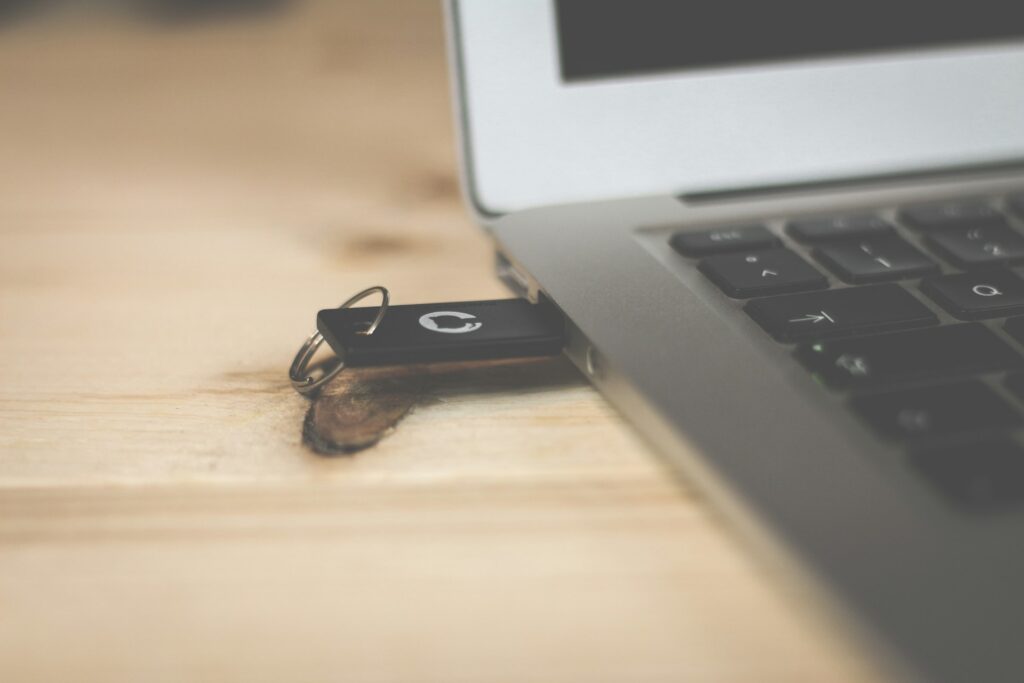
Tails does not install on the hard drive. It is recorded on a USB stick of at least 8 gigabytes and starts from there when you restart the computer.
On the screen appears a clean desktop, with a browser, email, word processor and encryption tools, ready to work.
When you’re done, you shut down, remove the memory, and the machine turns back on with Windows or macOS as if nothing happened.
The secret is in the RAM. Tails runs all over there, not on the album.
RAM is cleared every time your computer shuts down, so your session disappears without leaving any recoverable fragments. It works like a tent: you set it up, use it, lift it, and the ground is the same as before.
Your entire internet connection goes through the Tor network, which encrypts traffic and bounces it through three servers spread across different countries before reaching its destination.
No one on the road can see at the same time who you are and what you are consulting. If an app tries to connect outside of Tor, Tails cuts the connection immediately. For those who need to keep something between sessions, there is an optional encrypted vault within the same memory, where you can save documents, passwords or keys while the rest of the system keeps forgetting everything else.
The tool that shook the NSA
In 2013, Edward Snowden leaked thousands of secret documents about the U.S. government’s mass spying on journalists Glenn Greenwald, Laura Poitras, and Barton Gellman.
Tails was one of the pieces that made that communication possible without U.S. intelligence intercepting anything.
Poitras described it as a secure all-in-one system, compact enough to swallow. Gellman was more blunt: He wouldn’t have been able to talk to Snowden without that kind of protection, and he regretted not having had it years earlier.
The leaks themselves revealed how much Tails made the National Security Agency uncomfortable.
In internal slides from 2012, the NSA classified it as a major threat to its mission, and catastrophic when combined with other encryption tools.
Its surveillance system flagged anyone who searched for Tails’ website as suspicious, and described the program as a device used by extremists on extremist forums.
Few free programs can boast of having irritated the world’s most powerful spy agency so much.
Who it’s for, and who builds it
Tails protects those who would pay a high price for an oversight. Journalists who shield their sources. Activists and human rights defenders dodging censorship.
People living under repressive regimes. Survivors of violence who try to escape the surveillance of their own aggressor.
Behind the project there are developers who work in anonymity on purpose. They argue that their work should be enough to gain people’s trust, without the need to reveal their legal names.
It’s free software, and it’s always been free by conviction: no one should have to pay to use a computer safely.
On September 26, 2024, after fifteen years as an independent project, Tails joined the Tor Project, the non-profit organization that maintains the Tor network. The union made sense, because the first Tails was announced in 2009 on a Tor mailing list and both teams had been collaborating for years.
The head of Tails confessed that the most difficult thing was never technology, but to sustain the finances and administration of a tiny project.
In 2013, when the Snowden case broke out, Tails operated with an annual budget of close to 42,000 euros, less than 60,000 dollars.
Sure, but not magical
The creators themselves repeat a warning that should be taken seriously: Tails is safe, but not magical.
It does not protect against a keyboard with spyware installed on the machine, or against human error, or against an adversary capable of monitoring the entry and exit of traffic at the same time. It also doesn’t magically encrypt your emails; it gives you the tools, but you take care of it.
In 2017 that limit was clear. The FBI, with the help of Facebook, took advantage of a flaw in the video player that Tails brought to identify a criminal who harassed minors.
The vulnerability existed, and someone exploited it. The system reduces the places where you can go wrong, as Snowden himself has said, but it doesn’t eliminate them entirely.
How to get started
The most recent version, Tails 7.8.1, was released on June 4, 2026.
To try it you need a computer less than ten years old with a 64-bit processor, at least 3 gigabytes of RAM and an 8 gigabyte USB stick. Download it only from the official site, tails.net, and verify the file with the tool that the page itself offers. Buy new memory from a trusted brand, avoid gifted ones, and restart the system every time you change tasks so you don’t mix identities.
In Resume, Tails is an autonomous operating system, which fits on a USB, leaves no trace and although it does not make anyone invisible, it gives you something more modest and valuable: the possibility of working on any computer in the world without leaving behind the trace that gives away who you are.
References
Der Spiegel. (2014, December 28). Prying eyes: Inside the NSA war on internet security. https://www.spiegel.de/international/germany/inside-the-nsa-s-war-on-internet-security-a-1010361.html
Finley, K. (2014, April 14). Out in the open: Inside the operating system Edward Snowden used to evade the NSA. WIRED. https://www.wired.com/2014/04/tails/
Franceschi-Bicchierai, L. (2020, June 10). The FBI used a fake child porn site to hack Tails. Vice. https://www.vice.com/en/article/fbi-tails-hack-child-porn/
Freedom of the Press Foundation. (2014, April 2). Help support the little-known privacy tool that has been critical to journalists reporting on the NSA. https://freedom.press/news/help-support-the-little-known-privacy-tool-that-has-been-critical-to-journalists-reporting-on-the-nsa/
Tails. (n.d.). Warnings: Tails is safe, but not magical. https://tails.net/doc/about/warnings/
Tails. (2026, June 4). Tails 7.8.1. https://tails.net/news/version_7.8.1/
The Tor Project. (2024, September 26). Uniting for internet freedom: Tor Project & Tails join forces. https://blog.torproject.org/tor-tails-join-forces/