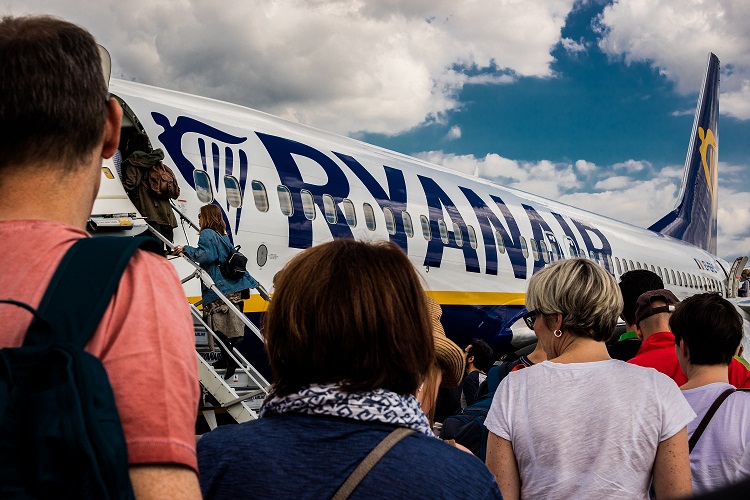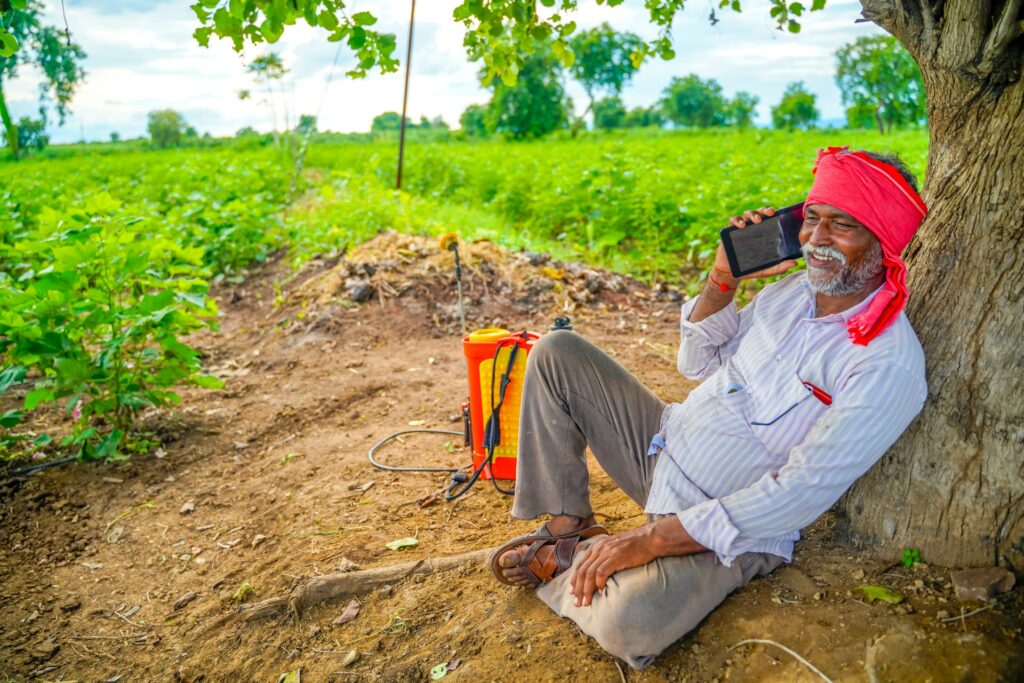
Although companies such as Starlink have been offering satellite connectivity for several years, mobile services have been limited to ships, trains, airplanes and automobiles, but that is changing.
Companies such as AST SpaceMobile and Starlink itself already connect ordinary cell phones to satellites orbiting in space with very good coverage. Countries such as Chile and Peru in Latin America have already launched commercial service, while other territories such as Colombia and Costa Rica, for now, are running pilot tests without major progress.
A shift in connectivity paradigms
By: Gabriel E. Levy B.
Although satellite technology is not new, and neither is mobility, the ability to connect mobile phones to data in a remote, isolated place has been restricted to very exclusive, high-cost services such as Iridium technology, which also required bulky and extremely expensive phones designed for ships, oil companies or expeditions. However, everything suggests the equation could change very soon.
A technology little known in everyday life, called direct-to-cell, or D2C, is changing that logic and significantly revolutionizing connectivity in the Global North. Today an ordinary smartphone, even a low-cost one, with no accessories or additional apps, can link to a satellite efficiently and at costs far lower than what we had been used to until now.
By mid-2026, SpaceX has more than 700 of these satellites in operation, with service in 22 countries and about 60 compatible smartphone models, mostly from Samsung, Motorola and Apple, although these are not the only brands that work, and the service is compatible with both Android and iOS.
The impact on ISPs
In practically all of Latin America, with the exception of Uruguay and Chile, most rural connectivity does not depend on the large telecommunications operators but is in the hands of regional ISPs, small internet service providers, many of them micro and small businesses, cooperatives, associations or family-run companies, along with WISPs, which are simply the wireless variant of this business model and distribute the signal from antennas installed on hills, rooftops and farms.
For them, the question is obvious: will the satellite that talks directly to the cell phone take away their customers?
In the short term, the blow from this new D2C satellite connectivity technology looks very limited. Direct-to-cell connection offers modest speeds today, as we will see later, and works mainly outdoors. Inside homes, tunnels, forests or shelters, coverage for this type of service is practically nonexistent.
The reality in practice is that a family watching TV over the internet, a student attending online classes, a farmer selling produce online, or even a young person consuming social media will ultimately still need the fixed service provided by the town’s WISP.
The risk appears on other fronts, although it is also limited and does not, by itself, constitute a tangible threat.
First, there are users who pay for a basic plan just to communicate, who might prefer a satellite add-on included in their cell phone plan. In this way, a satellite service ends up bundled with the traditional one.
The second front of a potential risk is the radio spectrum, since companies such as Starlink need to lease frequencies from licensed mobile operators, as it did with Entel in Chile and Peru, and the reality is that WISPs lack those frequencies, so the new business ends up strengthening the big market players such as Claro, Tigo or Movistar.
That said, in the medium term the threat could indeed grow substantially, since companies such as AST SpaceMobile promise peak speeds above 150 megabits per second in each coverage cell. If they actually deliver, which is no easy feat, they would compete head-on with many rural internet access plans, although it should be noted that no one knows how much a service of this kind might cost.
Prudence is the best counsel
Recent history, however, invites caution and a rejection of apocalyptic narratives. For example, in 2023, when Starlink arrived with its residential internet package, many saw it as the executioner of WISPs, but reality showed us that many of them ended up buying the satellite service and redistributing it over WiFi among dozens of households, as we analyzed at the time in a previous Andinalink article.
Starlink itself prefers to enter Latin America hand in hand with local operators, and that has been its successful method. In Brazil, for example, the provider Alares distributes the residential service in areas without fiber and keeps the customer relationship, becoming a strategic ally for a high-cost product without having to invest in infrastructure or technology.
In Colombia, a very promising window is also opening. Recently, the ANE (National Spectrum Agency) modified the conditions for the 900 MHz band so that, for the first time, organized communities and regional ISPs can access that spectrum, a quite successful project in which technical tests reached up to 32 megabits per second, even in hard-to-cover areas.
In my view, the WISPs that come out best from this fierce competition will be those that use the satellite as one more source of capacity and offer what a phone connected to orbit cannot guarantee: nearby support and prices designed for rural villages and for the reality of their neighborhood.
Chile and Peru opened the door
In Latin America, Entel, one of the region’s leading telecommunications companies, took the lead by enabling satellite text messaging in November 2025, and since March 25, 2026, it has allowed customers to use WhatsApp, Google Maps, AccuWeather and X in areas without terrestrial signal, as a complement to the services the user already has, drastically reducing the areas without coverage.
With that step, Chile became the first country in the region and the seventh in the world to offer the service, while Peru is following closely, since Entel Peru launched in December 2025 with messaging and later added apps to its data services. It must be acknowledged that these advances have come more from a private company’s interest in expanding its services than from any government initiative, an interesting bet that gives this company a notable competitive advantage over Claro, Tigo and Movistar.
Two bets and many limits
In this race, it is important to note that Starlink is not the only one with vision. AST SpaceMobile, in partnership with the giants AT&T and Verizon, chose to focus its efforts on a few enormous satellites, whose antennas exceed 220 square meters and which are designed to bring mobile broadband to unmodified phones. Under this model, the company would expect to have between 45 and 60 of these satellites in orbit by the end of 2026, which makes it real and strong competition for Elon Musk’s company.
Another issue we cannot leave out is latency, that is, the time it takes the signal to travel there and back, which ranges from 100 to 600 milliseconds. That is enough for a message, a map or an emergency alert, so watching a high-definition series on Netflix from the high Andean moors or TikTok videos in the middle of the jungle is, for now, ruled out, at least while the technology evolves and speeds improve substantially.
Colombia tests, but doesn’t switch on
In Colombia, the satellite cell phone is still not available to the public. On May 26, 2026, the Ministry of ICT, the National Spectrum Agency (ANE) and the Communications Regulation Commission (CRC) carried out a pilot at Los Tungos lagoon, in Sumapaz, a wooded region on the outskirts of Bogotá, and they did it from a spot with no cellular coverage, using an Android phone that sent a distress message through the Skylo network and a Viasat satellite. The result is that the alert reached Bogotá’s C4, the center that coordinates the city’s emergencies, as expected, meaning the test was a success.
The ANE published a technical document with guidelines for enabling this connectivity. Its director, Sergio Sotomayor, acknowledged that no Colombian operator has publicly announced a project of this kind, although he did not rule out that one might be interested in doing so. He also warned that using the same frequencies as terrestrial networks for satellites requires legal adjustments to the country’s spectrum management plan.
The CRC, for its part, is studying non-terrestrial networks, a term that covers satellites and other aerial platforms, with scenarios projected to 2035. Its analysis identifies five key issues: coverage, quality of service, compatible devices, spectrum use and competition.
The consultation with the sector closes on October 2, 2026.
The delay has technical explanations, although it is hard to accept. For example, in Chile people can already send WhatsApp messages from Rapa Nui, while in Colombia we are still discussing who should receive the emergency call.
In short, phones that connect directly to satellites are no longer a promise. For several months now they have been working in Chile and Peru thanks to Entel, and Colombia passed its first test in Sumapaz. Arriving late gives the country the advantage of learning from its neighbors. That window is closing fast, and the rules written now will determine whether the sky complements national networks or replaces them without public oversight.
References
- 5G World Pro. (2026, July 22). Starlink T-Satellite in 2026: Where the rollout actually stands. https://5gworldpro.com/blog/2026/07/22/starlink-t-satellite-in-2026-where-the-rollout-actually-stands/
- AST SpaceMobile. (2026). Next-generation BlueBird. https://ast-science.com/next-gen-bluebird/
- Ayuda.LA. (2026, June 30). Starlink en Latinoamérica 2026: el socio que compite contigo. https://ayuda.la/blog/starlink-latam-socio-competidor-isp-2026/
- BioBioChile. (2026, March 26). ¿Qué es Starlink Direct to Cell? Servicio satelital permite usar WhatsApp sin red móvil terrestre. https://www.biobiochile.cl/noticias/ciencia-y-tecnologia/pc-e-internet/2026/03/26/que-es-starlink-direct-to-cell-servicio-satelital-permite-usar-whatsapp-sin-red-movil-terrestre.shtml
- Colombia es Pasión. (2026, April 10). Internet en Colombia 2026: cobertura, precios y operadores. https://www.colombiaespasion.com/internet-colombia-2026-operadores-cobertura/
- Consultant Alliance. (2026, July 23). Satellite internet on your smartphone: How direct-to-cell works in 2026. https://www.consultant-alliance.com/2026/07/satellite-internet-on-your-smartphone-how-direct-to-cell-works-in-2026/
- DPL News. (2026, May 22). ANE inicia análisis de la tecnología satelital D2D en Colombia. https://dplnews.com/ane-inicia-analisis-tecnologia-satelital-d2d-colombia/
- El Colombiano. (2026, August 10). El futuro de las telecomunicaciones debe convertirse en proyecto nacional. https://www.elcolombiano.com/opinion/columnistas/el-futuro-de-las-telecomunicaciones-debe-convertirse-en-proyecto-nacional-EC39807443
- Impacto TIC. (2026, June 19). ANE traza la hoja de ruta del espectro en Colombia: banda de 900 MHz, 5G y tecnología satelital de emergencia. https://impactotic.co/politicas-tic/ane-traza-la-hoja-de-ruta-del-espectro-en-colombia-banda-de-900-mhz-5g-y-tecnologia-satelital-de-emergencia/
- Infobae. (2025, December 22). Cómo funciona Starlink en el celular y qué requisitos se deben cumplir para usarlo. https://www.infobae.com/tecno/2025/12/22/como-funciona-starlink-en-el-celular-y-que-requisitos-se-deben-cumplir-para-usarlo/
- KeepTrack. (2026, July 16). Starlink direct to cell status and phones 2026. https://keeptrack.space/deep-dive/starlink-direct-to-cell
- Levy B., G. E. (2023, November 28). Starlink y los WISP rurales: de rivales a aliados en la era digital. Andinalink. https://andinalink.com/starlink-y-los-wisp-rurales-de-rivales-a-aliados-en-la-era-digital/
- Ministerio de Tecnologías de la Información y las Comunicaciones. (2026, May 26). Colombia prueba nueva tecnología para atender emergencias en territorios apartados. https://www.mintic.gov.co/portal/715/w3-article-438357.html
- Mobile Time Latinoamérica. (2026, June 3). Colombia prepara el camino para la conectividad satelital directa al celular. https://mobiletime.la/noticias/03/06/2026/colombia-preparada-para-d2d/
- Teleprónter. (2026, September 4). Satélites podrían llevar señal a celulares sin cobertura en Colombia. https://www.telepronter.co/satelites-podrian-llevar-senal-a-celulares-sin-cobertura-en-colombia/
- Via Satellite. (2026). AST SpaceMobile kicks off launch campaign for upgraded BlueBird sats. https://www.satellitetoday.com/launch/2026/01/04/ast-spacemobile-kicks-off-launch-campaign-for-upgraded-bluebird-sats/