This article is sponsored by
The society of fatigue is the diagnosis with which the philosopher Byung-Chul Han describes our time. We are no longer disciplined from the outside, now because of current computer developments we demand ourselves to give results, optimize ourselves and always be available.
Hyperconnectivity, social networks and artificial intelligence accelerate this logic. They promise to free up our time, but they raise expectations, fragment attention, and inadvertently turn us into bosses and employees of ourselves.
Hyperconnected and tired
By: Gabriel E. Levy B.
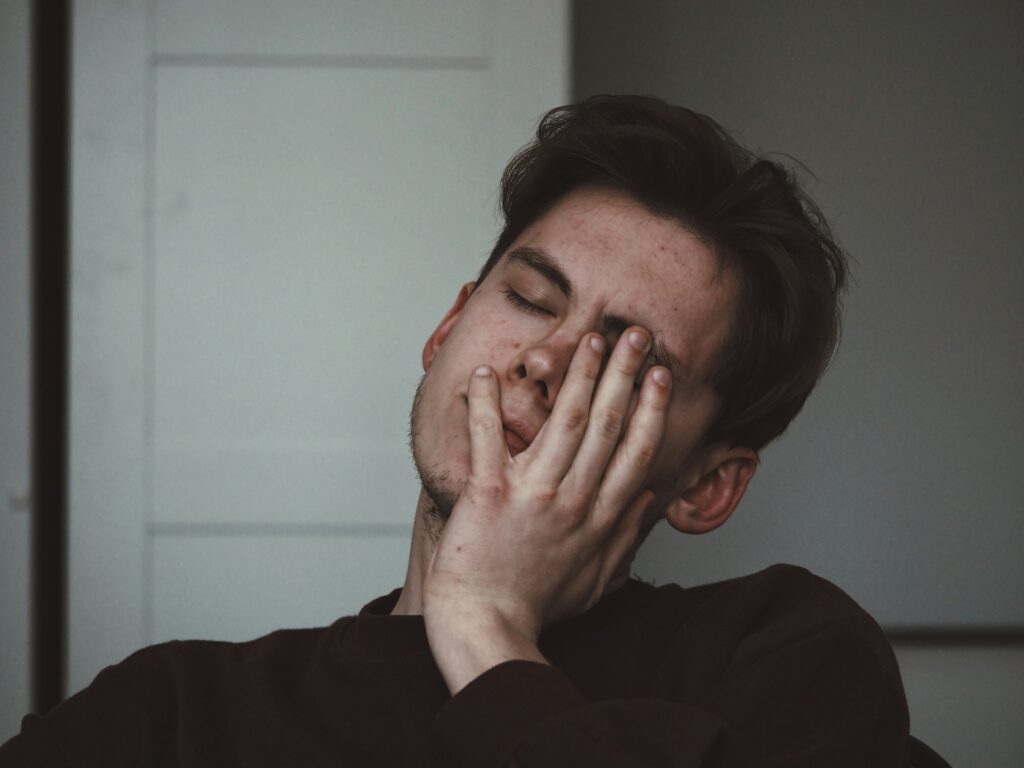
It’s twenty past eleven on any given Tuesday. You close your laptop, but first you answer a message, schedule three emails to come out at 7:45, ask an AI to write a draft for tomorrow and, while you brush your teeth, open TikTok and a productivity coach promises to double your performance without losing hours of gym.
You turn off the light. It takes you forty minutes to fall asleep.
This scene, repeated in millions of connected homes, is the living image of what the South Korean-German philosopher Byung-Chul Han described in his book “The Fatigue Society”, published in 2010.
A subject who no longer needs anyone to discipline him because he disciplines himself. Someone who confuses freedom with coercion and who burns himself chasing an optimized version of himself.
Fifteen years after that essay, and after receiving the 2025 Princess of Asturias Award, Han once again insisted on an idea that is increasingly difficult to refute.
We have become, he says, tools of the smartphone. He uses us, not the other way around.
Han’s thesis is elegant in its brutality.
The disciplinary society that Michel Foucault analyzed (prisons, factories, schools, insane asylums, all institutions of “you shouldn’t”) has been replaced by a society of performance governed by “yes you can”, “yes you can”, “yes we can”.
Change is not liberating, it is more subtle.
When everything is permitted and everything seems possible, the subject simultaneously becomes master and slave of himself. Freedom is transformed into a coercion, that of performance.
The exploiter and the exploited are the same person.
The boss lives inside.
Hence, the dominant pathologies of the 21st century are no longer infectious, like the great viral epidemics of the past, but neuronal.
Depression, anxiety, burnout, attention deficit, borderline disorder.
They are diseases of excess positivity, of an ego that exhausts itself trying to be unlimited.
Numbers accompany philosophical intuition with an uncomfortable forcefulness.
The World Health Organization reported in September 2025 that more than one billion people live with mental disorders, and that depression and anxiety already cost the global economy close to a trillion dollars annually.
Among Generation Z, 86% report having felt burned out at some point and 78% confess to being addicted to their mobile phones, with an average of six and a half hours a day in front of the screen.
Generative artificial intelligence was sold as the tool that, at last, would give time back to the worker. The exact opposite is happening, and there is beginning to be solid data to support it. UC Berkeley research published in 2025 showed that 67% of employees who adopted AI tools that year ended up working longer hours, not less.
Harvard Business Review confirmed in 2026 the correlation between AI adoption and intensification of work. An Upwork survey revealed that 77% of workers feel that these tools increased their workload.
Dominated by Mobile and Apps
Each new application raises the expectations of output and, with them, the floor from which one feels lazy.
Han himself, without demonizing it, has warned that human beings can end up becoming slaves of their own creation.
The map is enriched when other voices cross paths with his.
Jonathan Crary, in 24/7, described how late capitalism attacks the last unproductive stronghold of the human being, the dream.
Sleep, he says, is one of the few interruptions left to the theft of time.
The data from the labor surveillance software confirms it from another shore.
By 2025, according to ExpressVPN, 74% of U.S. employers were already using some form of digital monitoring on their employees.
The French data protection authority fined Amazon France Logistique €32 million for a system deemed excessively intrusive. We always work, everywhere, observed.
Shoshana Zuboff adds the economic piece.
In The Age of Surveillance Capitalism, he explains that human experience has become raw material for markets where predictions about our behavior are bought and sold.
Each scroll or compulsive consumption on networks, each pause, each like, feeds models that are then sold back to us as a recommendation, advertisement or small invisible push. Han and Zuboff agree, from different traditions, on a disturbing conclusion.
Never before has power been so effective because it has never been so invisible.
Bernard Stiegler offers the key word to understand the cognitive side of the problem, proletarianization. If in the nineteenth century the worker lost his know-how by yielding his gestures to the machine, in the twenty-first century we are losing the know-how to think by delegating memory, attention and judgment to technical systems.
It is difficult to read Stiegler today and not think of students who turn in AI-generated work that they do not understand, of journalists who sign notes that they did not write, of programmers who copy code that they would not know how to debug.
AI promises to expand us. Too often it stunts us.
Hartmut Rosa completes the picture with his theory of acceleration.
We live accelerating the technical, the social and the rhythm of life itself.
The modern paradox, he says, is that we save time at an unprecedented speed and yet we never have time. Its antidote is not slowness, but resonance, a relationship with the world in which things, people, and ideas affect and transform us, rather than passing through us as data by a server. We do a lot, we feel little.Breaking the Infinite Cycle
Mark Fisher warned in Capitalist Realism that the disease of our time was the inability to imagine alternatives.
But some signs suggest that cracks exist. France recognised the right to digital disconnection in 2017, Spain enshrined it a year later and reinforced it with the Remote Work Law.
The so-called quiet quitting, which we could translate as silent quitting, is that attitude of workers who stop giving overtime to the company and limit themselves to fulfilling what their contract says.
Not a call after six, not an email on Sunday, not an additional project without payment.
Viewed with benevolence, it is the first strike of the performance society against itself. A small domestic rebellion against the mandate to always give more.
The European Union is also making progress in algorithmic regulation. That is, in setting rules for automated systems that today decide such delicate things as who to hire, who to fire, which delivery person to send to such an area or how much to pay a platform worker.
California, meanwhile, is debating “No Robot Bosses” laws.
The name says it all. They seek to put limits on the idea that an algorithm can discipline, sanction or fire a human being without human judgment.
Even so, it is advisable to resist easy optimism. More than half of Spanish companies failed to comply with the digital disconnection law between 2024 and 2025.
Silent resignation coexists in the same feed, on the same TikTok account, with the so-called “hustle culture”, that culture of permanent hustle that glorifies working sixteen hours, sleeping four and dedicating the surplus to a parallel venture. The platforms themselves, in addition, entrust their algorithms with the task of protecting us from their algorithms.
It is absurd writing. It is more absurd lived.
Han does not hand out recipes. But his recent work does leave a compass. To recover boredom, that unproductive pause where the mind wanders and, sometimes, finds things.
Regain sustained attention, read an entire book without jumping to the cell phone every three minutes. Recover silence. Sleeping eight hours as a political act, because in an era that measures success in the number of tasks done, resting is a way of disobeying.
The silent obligation to show what we do, what we eat, where we travel, what we read this week, as if each gesture needed an announcement.
Treating mental health as a collective matter, moreover, and not as a private failure that each one manages alone with their psychologist and a meditation application.
Protecting intimate life from self-branding
The expression comes from English and literally translates to “self-branding” or “self-branding”.
It was born in the world of corporate marketing and describes the operation of treating oneself as if one were a product. Packing. Differentiate. Position yourself in a saturated market. To have a tone, an aesthetic, a target audience, a value proposition.
The disturbing thing is that this logic, originally designed for companies, moved into personal life without asking permission.
Today it applies to professionals, students, adolescents, even children. Anyone with a phone and an open account.
Han describes it uncomfortably. Intimacy, he says, was that space where one could exist without being observed. Where there were gestures that did not belong to anyone else. A dinner with friends without a photo.
A book read without a review. A trip lived without posting. A mourning gone through in silence. A joy shared only with those who were present.
Self-branding dissolves that boundary. Turn every experience into potential content. Each dish in photo. Each reading in appointment for LinkedIn. Each child is a secondary character of the maternal account.
Each breakup, hopefully, in a viral thread.
Pressure is not only aesthetic. It is also economical. In an economy where digital reach translates into job opportunities, contracts, personal branding and, eventually, income, not exposing oneself begins to be perceived as a competitive disadvantage. Whoever does not publish, does not exist. Whoever does not show up, does not invoice. And so, without anyone ordering it, we end up managing a miniature public life, with its editorial calendar, its positioning metrics, its streaks, its winning formats, its optimal publication schedules. A small one-man business whose only product is ourselves.
The most subtle thing about the phenomenon is what it does inside.
When you get used to documenting yourself, you begin to experience yourself in the third person. He no longer eats, he plans a photo of the plate. He no longer travels, he edits a mental reel while walking. He no longer thinks, he writes a possible post. The immediate experience becomes the raw material of a future content. The present is postponed. And, along with it, the possibility of simply being there, without a script, without an internal camera, without the permanent question of how this will be told.
There is another, quieter effect on mental health. When you are your own brand, any criticism becomes personal and any indifference devastating. A post without likes is no longer a weak post.
It is a narcissistic wound. A defeated version of oneself. The platforms, which know this fiber well, dose the validation with the same technique with which a slot machine doses the reward. A little today. A lot tomorrow. Nothing after tomorrow. And the user, hooked, returns. Not so much out of vanity. Rather out of a need to know if it still exists in the eyes of the algorithm.
Defending intimate life against self-branding therefore means something quite radical in this context. Recover spaces without witnesses. Allowing yourself to do things that are not going to be published. Having friends who don’t appear in any photos. Sustain long, silent projects, without weekly updates. Getting bored without telling it. Suffer without turning it into inspirational content. Laugh without anyone seeing. To live, in short, a part of life outside the shop window. And understand that this hidden part is not what is left over after the work of the personal brand. It is, almost, the only thing that remains his own.
In short, hyperconnectivity and AI are sharpening, not alleviating, the weariness society that Han diagnosed more than a decade ago. We work more, sleep worse and watch ourselves. But between normalized burnout and capitalist realism, cracks are appearing. Disconnection laws, quiet quitting, algorithmic regulation. Reading Han today is not nostalgia, it is almost a survival manual.
References
Crary, J. (2015). 24/7. Late capitalism and the end of the dream. Ariel.
Fisher, M. (2016). Capitalist realism. Is there no alternative? Black Box.
Foucault, M. (2002). Monitor and punish. Birth of the prison. XXI century.
Han, B.-C. (2012). The society of fatigue. Herder.
Han, B.-C. (2014). In the Swarm. Herder.
Han, B.-C. (2014). Psychopolitics. Neoliberalism and new techniques of power. Herder.
Han, B.-C. (2021). Non-things. Bankruptcies of today’s world. Taurus.
Han, B.-C. (2023). Contemplative life. In praise of inactivity. Taurus.
Harmony Healthcare IT. (2025). State of Gen Z mental health 2025. https://www.harmonyhit.com/state-of-gen-z-mental-health/
Harvard Business Review. (2026, February). The AI productivity paradox. https://hbr.org
World Health Organization. (2025, September). More than a billion people live with mental health disorders: there is an urgent need to expand services. https://www.who.int
Princess of Asturias Award. (2025). Minutes of the Jury for the 2025 Princess of Asturias Award for Communication and Humanities: Byung-Chul Han. Princess of Asturias Foundation.
Rosa, H. (2016). Alienation and acceleration. Towards a critical theory of temporality in late modernity. Katz.
Rosa, H. (2019). Resonance. A sociology of the relationship with the world. Katz.
Stiegler, B. (2015). Symbolic misery. Shangrila.
UC Berkeley. (2025). AI adoption and working hours: Empirical evidence from US workers. University of California, Berkeley.
Upwork. (2024). AI-enhanced productivity report. https://www.upwork.com
Zuboff, S. (2020). The era of surveillance capitalism. The struggle for a human future in the face of the new frontiers of power. Paidós.