This Article is sponsored by
In 2024, Japan’s prime minister caused controversy by stating that his country was too dependent on the United States for technology, especially in artificial intelligence.
It was a very uncomfortable confession for a nation that once dominated the global electronics industry.
But that, as the Japanese say, is now water in the past. Today Japan is back and back with everything.
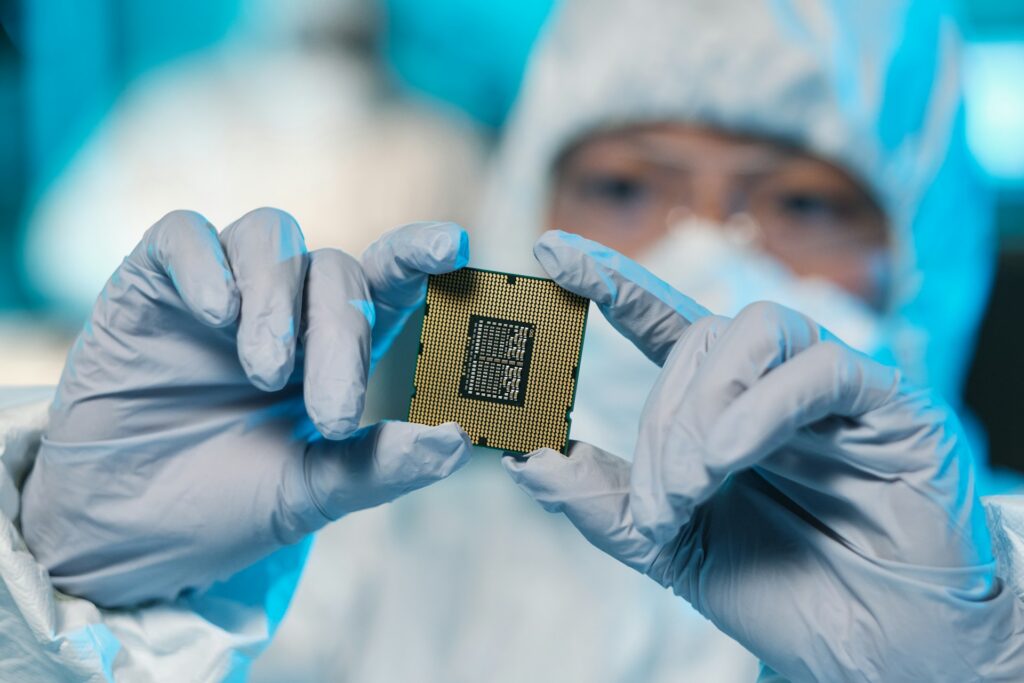
It plans to manufacture microcircuits so small and powerful that they could change the global technological landscape, especially in the TELCO sector, and it is doing so with a speed and forcefulness that has giants such as Taiwan, South Korea and the United States on alert.
A plan that has no precedent in telecommunications
By: Gabriel E. Levy B.
The figure that’s circulating in tech and financial circles is hard to process: $325 billion.
That’s what Japan plans to invest in its semiconductor industry over the next decade, combining public and private funds. To give it context: it is more than the annual GDP of countries such as Chile or Portugal. The expected return exceeds one trillion dollars.
And the relative effort is even more telling. Japan already spends 0.71% of its GDP on chip subsidies, the highest proportion in the world. The United States, with all its industrial muscles, invests just 0.21%. Germany, 0.41%. The Japanese commitment is not only about money, it is about conviction.
The strategy has two tracks. The first: to attract the Taiwanese TSMC, the company that today manufactures practically all the high-end chips on the planet.
TSMC already has a factory operating in Japan and announced in 2026 a second plant that will use 3-nanometer technology, the first factory with that capacity outside Taiwan to operate under the TSMC label.
The second lane is more ambitious and risky: to build from scratch a Japanese foundry capable of competing with the best in the world. That company is called Rapidus, and they intend to change the global equation.
The company created to win a war
Rapidus was born in August 2022. It didn’t come from a garage or the vision of a lone entrepreneur. It was created by the Japanese government and a group of eight companies in the country that read the future and decided to bet big: Toyota, Sony, NTT, NEC, Kioxia, SoftBank, Denso and MUFG Bank.
Names that range from the automotive industry to telecommunications and banking. The mission was simple to enunciate and almost impossible to execute: to manufacture the most advanced chips in the world in Japan.
What came next surprised even skeptics.
In December 2024, Rapidus installed one of the most sophisticated extreme ultraviolet lithography machines on the planet, manufactured by the Dutch company ASML, at its plant in Chitose, a city in northern Japan, on the island of Hokkaido.
Just three months later, they were already doing the first exhibitions on silicon wafers. And in July 2025, twelve days after processing their first full batch, they achieved something that few expected so soon: the first functional 2-nanometer transistor made on Japanese soil.
To understand the magnitude of this achievement, it is necessary to know what a nanometer means in this context.
A nanometer is one millionth of a millimeter. The 2-nanometer chips concentrate more than 230 million transistors in a single square millimeter. The smaller the transistor, the more powerful and efficient the chip.
With that technology, a processor can be up to 45% faster or consume 75% less power than with technology just four years ago.
Rapidus’ plan is to begin production on a scale in the second half of 2027, with the chip that the entire industry is talking about: 2 nanometers.
And they are already designing the next factory to make the leap to 1.4 nanometers, which is where Fujitsu, another historic Japanese company that announced that it will manufacture its next-generation artificial intelligence chips there, is also aiming.
What sets Rapidus apart from the rest
Rapidus is not intended to compete with TSMC in volume. It would be a lost battle beforehand. Their bet is different: speed and flexibility.
While TSMC takes between 90 and 120 days to produce a batch of chips, Rapidus does it in 50 days, and for urgent orders, in just 15.
That may sound like technical detail, but in the tech industry, where companies compete to launch new products before their rivals, halving manufacturing time can be worth billions.
The key is in full automation.
Robots and artificial intelligence manage the production line with precision that eliminates many of the human bottlenecks. It’s not just efficiency: it’s a different industrial philosophy that can be a game-changer.
In addition, the money continues to arrive. In February 2026, 32 private companies, including Canon, Honda and IBM itself, invested $1.7 billion in Rapidus.
The cumulative government support already exceeds 11,000 million dollars. And Broadcom, one of the world’s largest chipmakers and a key supplier to the telecommunications industry, is already testing samples of its prototypes.
The impact on routers, fiber optics and WiFi: a silent revolution
Here is the part that few journalists have told well and that directly affects the telecommunications industry, network operators and, ultimately, the speed and quality of connections that millions of people use every day.
Modern telecommunications equipment, operator routers, fiber optic equipment, WiFi access points, work thanks to very specific chips. And those chips, today, are manufactured by a handful of companies that depend almost exclusively on TSMC in Taiwan.
Take high-end routers, those that move internet traffic in large data centers and carrier networks.
Their brains are processors designed by Broadcom, Nokia, Cisco or Marvell, all manufactured in nodes between 7 and 3 nanometers.
Nokia uses its FP5 processor, which is already at 7nm and reduced power consumption by 75% compared to its previous generation.
Broadcom has its Tomahawk family, the most recent version of which uses the 3nm node.
The next generation of these chips will aim for 2nm. That’s where Rapidus can come into play, and it’s already testing it with Broadcom.
In the world of GPON fiber optics, the technology that brings high-speed internet to homes and businesses through glass cables thinner than a hair, the story is similar, but with more nuances.
The most basic equipment uses chips from previous generations and is very sensitive to price, so the Japanese impact will take longer to get there. But in the latest generation networks, the 50G-PON standard, which multiplies the capacity of traditional GPON by ten, Broadcom already manufactures its chips in 7nm with integrated artificial intelligence processors.
The next generation, the 100G-PON, will need even more advanced chips. And there Japan is already in the conversation.
Where the impact is felt first is in the WiFi. WiFi 7, whose standard was officially published in July 2025, is already in the latest generation routers. The chips that make this possible are mainly manufactured by MediaTek, with its Filogic 880 family, produced in 6nm from TSMC and Qualcomm with its Networking Pro platforms. Broadcom, interestingly, continues to use more mature nodes, but maintains 44% of the market in high-end phones such as Apple’s iPhones.
And then there’s WiFi 8, which already has chips in the sample phase. It does not seek to be faster in maximum speed, WiFi 7 already exceeds the theoretical 20 Gbps but more reliable and intelligent.
It uses artificial intelligence to manage multiple access points in a coordinated way, eliminates interference and makes the signal not cut even when there are many devices connected.
Broadcom, MediaTek and Qualcomm already have it in advanced manufacturing, all in 6nm. The standard will be closed between 2027 and 2028.
By then, Rapidus’ 2nm chips should be available to anyone who wants to make the leap.
What changes with 2nm chips isn’t just speed, it’s energy efficiency.
A business WiFi access point that today needs 25 watts to operate could drop to 17 or 18 with the next generation of chips.
In a corporate network with hundreds of access points, that translates into thousands of dollars in savings per year and fanless equipment, which means less noise, less maintenance, and more reliability.
What’s at stake beyond technology
There is a political and strategic reason behind all this that goes beyond market shares and profit margins.
Today, 90% of the most advanced logic chips on the planet are manufactured in Taiwan and South Korea. TSMC controls approximately 70% of the global advanced casting market.
That means if something were to disrupt production in Taiwan. A natural disaster, a geopolitical crisis, any event that has been filling the pages of newspapers for three years, the global technology industry would suffer a collapse in a matter of months.
It is not an academic hypothesis. In 2021 and 2022, a chip shortage less severe than that scenario cost Toyota the production of 500,000 cars.
Telecommunications equipment manufacturers waited weeks to receive basic components. The world suddenly understood that it depended too much on too small a place.
Japan is already irreplaceable in parts of that chain: it makes 53% of the world’s silicon wafers, 88% of chip-coating equipment, and has a dominant position in photoresist materials without which no modern chip can be made.
But lacking in-house manufacturing capacity in advanced nodes was a strategic contradiction. Rapidus closes that gap.
For the telecommunications industry, having an advanced smelter in Japan, a politically stable, U.S.-European ally of Japan, physically far from the Taiwan Strait, is extraordinary news.
Companies such as Cisco, Nokia, Ericsson or Broadcom itself would have a real manufacturing alternative that does not depend on a single geographical region.
And the technology gap with Chinese suppliers like Huawei, blocked on 7nm nodes by Western sanctions, would widen even further.
The challenge of difficulty
None of this is guaranteed. Rapidus is trying something no one has done before: jumping from a 40-nanometer manufacturing capacity directly to 2nm, with no intermediate stages. It’s like asking someone who has never run a marathon to compete in the Olympics.
The costs are enormous and private funding still lags behind what is needed.
Electricity in Japan costs twice as much as in South Korea or the United States, which makes each chip produced more expensive. And TSMC is almost two years ahead in 2nm mass production.
But there are signs that industry analysts are watching closely.
That Broadcom is testing samples. That Fujitsu has signed on to manufacture its AI chips at Rapidus. That 32 major private companies have invested 1,700 million dollars in the last round. That the government continues to put money with each annual budget.
What Japan is building is not just a factory.
It is a declaration of technological sovereignty in a world where whoever controls the chips controls, to a large extent, the future.
In short, Japan lost its leadership in semiconductors decades ago and recognized it late. But the answer it is giving is of historic proportions: the largest public and private investment in chips in its history, a start-up capable of making 2nm transistors, and a strategy that aims directly at reducing global dependence on the Taiwan Strait. For the telecommunications industry, the impact will be progressive but real: the routers of the future, the next-generation fiber-optic equipment, and the chips that will make WiFi 8 possible could be made, in part, in Hokkaido. It’s not a promise, it’s a roadmap with deadlines, prototypes, and real money behind it. If Japan complies, the world map of semiconductors will change forever.
Sources
- Rapidus Corporation. (2025, July). Rapidus achieves significant milestone at its state-of-the-art foundry with prototyping of leading-edge 2nm GAA transistors. https://www.rapidus.inc/en/news_topics/information/rapidus-achieves-significant-milestone-at-its-state-of-the-art-foundry-with-prototyping-of-leading-edge-2nm-gaa-transistors/
- Ministry of Economy, Trade and Industry of Japan. (2024). Summary of the semiconductor strategy for Japan’s revitalization. METI. https://www.meti.go.jp/english/policy/0704_001.pdf
- Nikkei Asia. (2026). Japan’s Fujitsu to develop cutting-edge 1.4nm chips for AI processing. https://asia.nikkei.com/business/tech/semiconductors/japan-s-fujitsu-to-develop-cutting-edge-1.4-nm-chips-for-ai-processing
- Center for Strategic and International Studies. (2024). Japan seeks to revitalize its semiconductor industry. https://www.csis.org/analysis/japan-seeks-revitalize-its-semiconductor-industry
- ASEAN+3 Macroeconomic Research Office. (2025). Japan’s strategic comeback in the global chip race. AMRO. https://amro-asia.org/wp-content/uploads/2025/03/SI5.-Japans-Strategic-Comeback-in-the-Global-Chip-Race.pdf