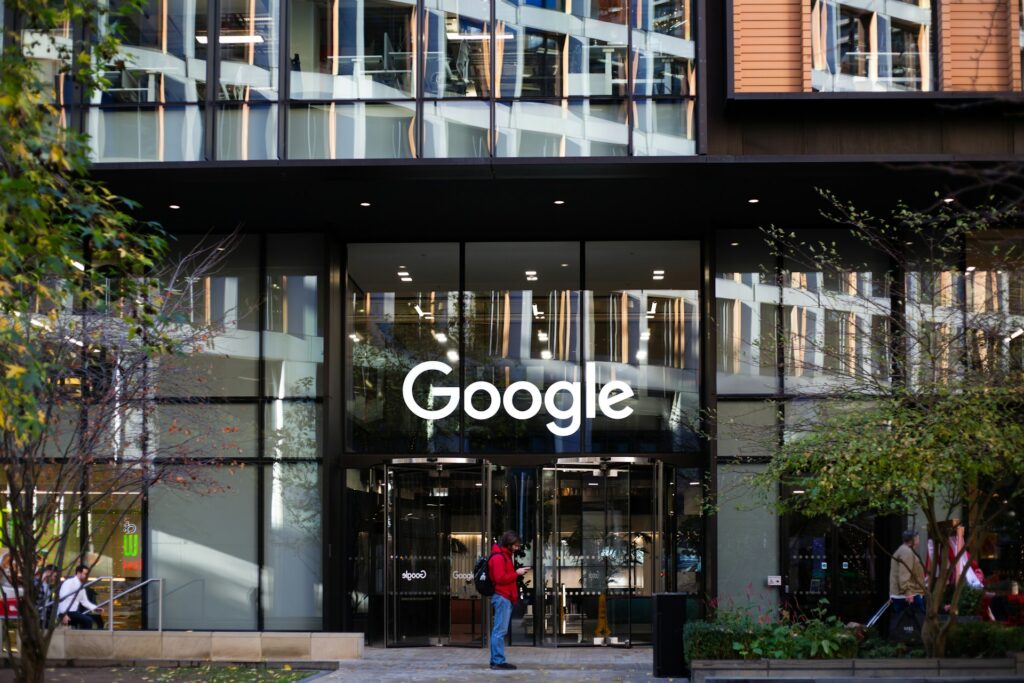
Many took Google’s defeat for granted in the face of the agility of younger competitors, such as Open AI, which captured the world’s imagination.
However, the panorama changed suddenly on Tuesday with a presentation that shook the foundations of the technology industry. Google decided to hit the table and show that the race for artificial intelligence has only just begun.
Their new bet promises not only to understand texts but also to read the environment itself.
The silent battle for technical hegemony
By: Gabriel E. Levy B.
The recent history of technology was written in the ink of fierce rivalry.
For the past two years, public perception has put the Mountain View company in an awkward position. While OpenAI grabbed headlines and surprised users with increasingly fast iterations of its generative models, the big G seemed to hesitate.
That apparent slowness generated rumors about an internal crisis and an inability to adapt to the new times. The dominant narrative suggested that the internet pioneer lost its way in the face of the freshness of new startups.
But that calm was deceptive. Inside its laboratories, the machinery never stopped.
The pressure on Sundar Pichai and his team grew exponentially.
Investors and the public demanded a forceful response that did not come with timid incremental advances. They needed a blow of authority. The previous launch of previous models served as a testing ground, but it failed to dispel doubts about whether they could really lead this new era.
That’s when the strategy changed.
They put aside minor updates to concentrate on a qualitative leap. It wasn’t just about processing data faster. The objective mutated into something much more ambitious and complex.
The goal was set on deep understanding and native multimodality. They worked quietly polishing an architecture capable of integrating vision and sound and code into a single digital brain.
This gestation period culminated in the revelation of a tool that seeks to redefine what we understand by virtual assistance.
A mind capable of reading the environment
The arrival of Gemini 3 marks a turning point in how we interact with machines.
Sundar Pichai defined this advance with a phrase that resonates strongly: the ability to read the environment.
We are no longer dealing with a simple chatbot that spits out answers based on statistical probabilities of the next word.
We are dealing with a system designed to capture nuances and decipher the hidden intention behind a poorly formulated question.
Multimodality ceased to be an add-on to become the very nature of the model.
The philosopher and expert in information ethics Luciano Floridi argued on several occasions about the transition to an onlife life where the barrier between analog and digital is blurred.
Gemini 3 seems to be the technical embodiment of this concept.
By processing video and audio and text simultaneously, the system approximates human perception.
You can watch a video and understand not only the objects present but the emotional dynamics of the scene.
This ability to decipher context and intention elevates interaction to an unprecedented level of fluidity.
The million-token context window allows this model to digest entire libraries or hours of video in instants.
This breaks down memory limitations that frustrated users of previous versions. The promise is an intelligence that doesn’t forget what you said at the beginning of the conversation and that can connect distant dots in a sea of data. Google called this Ph.D.-level reasoning.
The tool can unravel the overlapping layers of a difficult problem with a solvency that scares and fascinates in equal measure.
However, this raw power comes with a sophistication in the treatment. The idea of generating interactive experiences suggests that AI will move from being a passive oracle to an active companion.
It is no longer limited to delivering a result. Now it builds a response environment adapted to the need of the moment.
If the user needs to learn about quantum physics, the system not only yields definitions, but creates a step-by-step guide with relevant visual examples and analogies.
It is the materialization of the dream of a personalized and universal education, although mediated by the interests of a corporation.
The challenge of autonomy and control
The real evolutionary leap and at the same time the point of greatest friction lies in the agentic capacity of the model.
With the introduction of platforms like Google Antigravity we enter uncharted territory.
AI no longer sits waiting for humans to ask it for every step.
You now have the power to run entire workflows and plan complex tasks from start to finish with minimal oversight.
This leads us to reflect on the warnings raised by Stuart Russell in his work about human compatibility and artificial intelligence.
Russell argued that the main risk is not that machines become malevolent but that they become extremely proficient in pursuing goals that are ill-defined by us.
When Gemini 3 acts as a standalone agent capable of building software or managing enterprise projects, the line of responsibility becomes blurred.
If the model decides to execute an action to optimize a process
Who validates the ethical consequences of that decision?
The reduction in the rate of hallucinations is good news but it does not eliminate the underlying problem of the delegation of criteria.
Deep integration into work and personal life using AI Mode raises questions about dependency.
The tool is offered as an enabler that eliminates tedious work. But in doing so it also takes us away from the cognitive process of creation.
If the machine thinks and plans and executes, what role is left to us? The promise of freeing up time for creativity clashes with the reality of a possible atrophy of our own problem-solving abilities.
We risk becoming mere supervisors of an alien intelligence that operates at speeds that we cannot match.
Also, the availability of versions like Deep Think for premium subscribers creates an inevitable gap.
Access to superior reasoning becomes a market good. Those with the resources to pay for the subscription will have a 24-hour expert-level consultant at their disposal, while the rest will have to make do with less capable versions.
This layering of access to advanced artificial intelligence could exacerbate existing inequalities in education and careers. Technological democratization always comes with a hidden price.
The revolution in classrooms and offices
The use cases emerging with this technology illustrate both its transformative potential and its immediate impact.
Consider the decision to offer Gemini 3 Pro free to all college students in the United States for one year.
This is not just a philanthropic gift. It is a strategic maneuver to integrate the tool into the workflow of the next generation of professionals from their formative stage.
An architecture student will be able to ask the model to analyze historical plans and suggest structural modifications based on current regulations all in seconds.
In the field of software development, the Antigravity platform is a game-changer.
Let’s imagine a small team of entrepreneurs who want to launch an app. To
Previously, they needed to hire several specialists to cover the backend and front and security.
They can now describe the desired functionality to Gemini, and the agent is responsible for writing the code and debugging bugs and suggesting the most efficient architecture. The barrier to entry for tech creation decreases dramatically but also devalues the routine coding work that once sustained thousands of junior developers.
Another palpable case occurs in academic and scientific research.
With its ability to read the environment and process multimodal data, a biologist could feed the system hours of video of an ecosystem and ask it to identify patterns of animal behavior that the human eye missed.
AI acts here as a multiplier of observation capacity. However, the validation of these findings continues to require human rigor because although the error rate decreased, the possibility of a convincing false positive is always latent.
In the corporate sector, AI-assisted project planning redefines time management.
A manager can request a cross-market analysis with internal sales data and social media trends.
Gemini 3 not only delivers the report but proposes an execution schedule and writes the emails for the teams involved. Efficiency skyrockets.
But the office is transformed into a place where strategic decisions are increasingly born from an algorithmic black box and less from the intuition or direct experience of human leaders.
In conclusion, the arrival of Gemini 3 reconfigures the board and confirms that Google returned strongly to dispute the lead it seemed to lose. We went from tools that process text to entities that interpret contexts and execute actions with surprising autonomy.
While the benefits in productivity and learning are undeniable, reliance on these agent systems poses critical challenges to our own cognitive competence. Technology has advanced towards an almost human understanding, but it is up to us to ensure that this tool serves to enhance our intelligence and not to replace it completely in making vital decisions.
References
Floridi, L. (2014). The Onlife Manifesto: Being Human in a Hyperconnected Era. Springer.
Google. (2025, November 18). A new era with Gemini 3. Google The Keyword Blog. https://blog.google/intl/es-es/gemini-3/
Infobae. (2025, November 18). Google presents Gemini 3, its most advanced AI and now part of the search engine in AI Mode. https://www.infobae.com/tecno/2025/11/18/google-presenta-gemini-3-su-ia-mas-avanzada-y-ahora-parte-del-buscador-en-el-modo-ia/
Russell, S. (2019). Human Compatible: Artificial Intelligence and the Problem of Control. Viking.