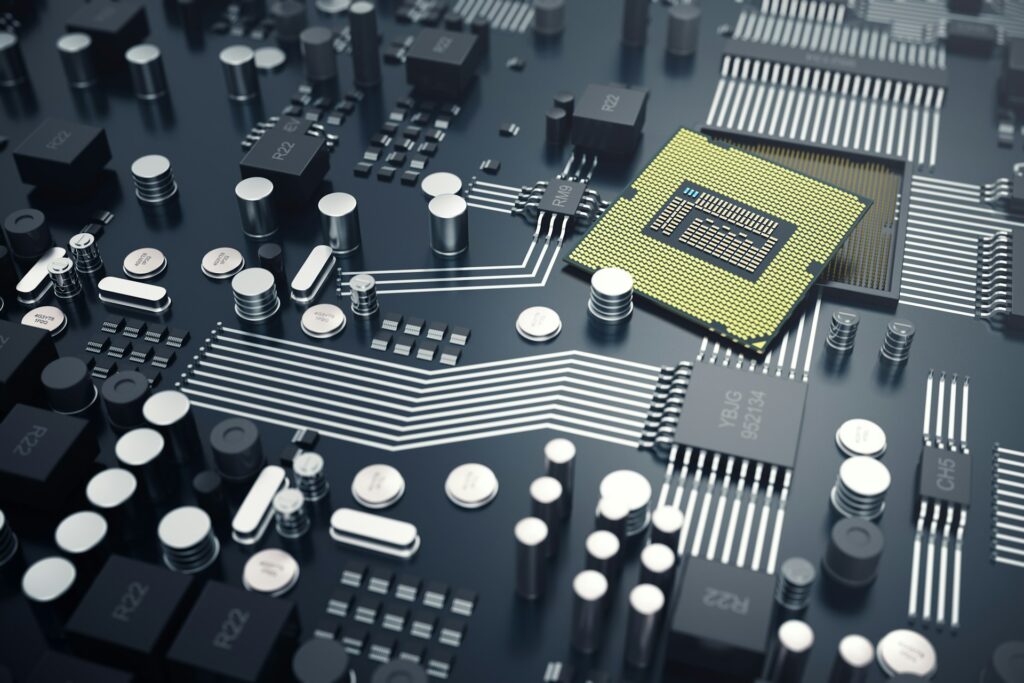
Samsung confirmed that the current shortage of memory chips will worsen in 2027, follow in 2028, and only begin to ease towards 2029. Behind that date there is a specific cause: artificial intelligence data centers are monopolizing the world’s production of memory and processors. The consequence is paid by all of us: more expensive computers, cell phones, cars and consoles, with less capacity and in smaller quantities.
The announcement that confirmed the fears
By: Gabriel E. Levy B.
Memory chips are the pieces where computers, cell phones and servers store the information they need to function. Without them, you don’t turn on a screen or open an app. And the world is running out of stock.
On July 30, 2026, during the presentation of its quarterly results, Samsung, the largest memory manufacturer on the planet, acknowledged that the shortage does not subside. Jaejune Kim, executive vice president of the memory business, warned analysts that the supply shortage will worsen next year and continue into 2027.
The company accompanied the announcement with a figure that explains the substance of the matter: its semiconductor division multiplied profits by more than 250 times compared to the previous year, and the group’s total profits grew 19 times, driven by the demand for chips for artificial intelligence. Selling memory has never been such a good business, and that’s just the problem.
Samsung also signed supply contracts for a minimum of five years with the world’s five largest data center companies, agreements that commit between 60% and 70% of its entire production capacity. Translation: most of the memory that he will manufacture until the end of the decade already has an owner.
Why did a technology that promises to make everything more efficient and cheaper ended up making the devices we use every day more expensive?
AI devours global production
To understand the scarcity, you have to look inside a data center: those giant warehouses full of servers where assistants such as ChatGPT, Gemini or Claude “live”. Training and operating these models requires massive amounts of special memory called HBM, which stands for high-bandwidth memory, capable of moving data at speeds that the memory of a typical computer can’t reach.
Manufacturing HBM has a hidden cost: each chip consumes three times the factory capacity of a conventional memory chip. And since only three companies, Samsung, SK hynix and Micron, concentrate more than 90% of the world’s memory production, each line that is dedicated to AI is a line that stops producing for cell phones and computers.
Business logic does the rest. Nvidia, OpenAI, Google, Microsoft, and Amazon pay more and buy in advance, so manufacturers reserve production for them. The consumer market receives the leftovers.
The phenomenon has already infected processors, the “brain” of computers. TSMC, the Taiwanese factory that produces chips from Apple, Nvidia and AMD, admitted through its president that it can only deliver about a third of what its large customers ask for. Intel and AMD raised the prices of their consumer processors by 5% to 10% since March, server processors by up to 20%, and the supply chain anticipates further increases in the second half.
The bill reaches your pocket
The market numbers tell the rest of the story. RAM memory modules, those bars that anyone bought to give their computer a second life, shot up to 200% between September 2025 and March 2026. Solid-state drives are in short supply and even traditional hard drives, which seemed doomed to retirement, have sold out: a Kingston executive said that the 2026 inventory has already been sold in its entirety.
The consulting firm IDC estimates that the average price of personal computers will rise about 8% this year, and its analyst Francisco Jerónimo anticipates that entry-level cell phones will return to configurations of 4 gigabytes of RAM, a figure that we thought had been exceeded, to maintain competitive prices. In other words: we will pay the same or more for equipment with less capacity.
Video games are not spared either. Graphics card memory comes out of the same factories as conventional RAM, so gaming computers and consoles face price hikes and delays in their upcoming releases, to the point that some analysts fear they will become luxury items.
The effect doesn’t stop at consumer tech, either. A modern car needs between 2 and 8 gigabytes of memory for its assistance and entertainment systems, professional cameras rely on increasingly expensive cards and disks, and many companies are postponing the renewal of their computer equipment or migrating to refurbished machines.
For Latin America, the blow is twofold. In budget devices, the most sold in the region, memory weighs a larger portion of the total cost, so the increase in prices punishes emerging markets first. Just when governments and schools are pushing digital inclusion, computers and cell phones are once again moving out of reach for millions of families.
And when does this end?
Samsung left a clue between the lines. If contracts with cloud giants last five years and new factories building Samsung, SK hynix and Micron go into full production by the end of the decade, supply will only be able to approach demand around 2029.
It is advisable to moderate expectations. The company itself rules out relevant increases in production in 2026 and 2027, and anticipates that 2028 will continue to be out of balance. When prices finally fall, they will do so to a lower level than they are today, but they will not return to pre-crisis figures, because AI will continue to claim a huge share of factories.
Shortages are no longer a passing storm and have become the new climate of the technology industry. Manufacturers, governments and users will have to learn to plan with it.
In short, artificial intelligence needs gigantic amounts of memory and processors, and manufacturers prefer to sell to data centers, which pay better. That’s why chips are scarce, prices are rising, and devices are losing performance. Samsung anticipates that the imbalance will worsen in 2027, continue in 2028 and only ease towards 2029, although prices will never return to previous levels. The era of cheap technology is behind us.
References
- (2026a, March 19). The Hidden Cost of AI: Why Your Next Computer Could Be More Expensive and Have Less Memory https://www.infobae.com/tecno/2026/03/19/el-costo-oculto-de-la-ia-por-que-tu-proxima-computadora-podria-ser-mas-cara-y-tener-menos-memoria/
- (2026b, April 23). Processors will be more expensive in 2026: Intel and AMD will raise the prices of their CPUs. https://www.infobae.com/tecno/2026/04/23/los-procesadores-seran-mas-caros-en-2026-intel-y-amd-subiran-los-precios-de-sus-cpus/
- López, L. (2026, July 30). Samsung has set a date for the moment when we will pay “normally” for the memory of our PCs. Xataka. https://www.xataka.com/empresas-y-economia/samsung-ha-puesto-fecha-al-momento-que-volveremos-a-pagar-normal-memoria-nuestros-pc
- The Andes. (2025, December 28). RAM in crisis: shortages, high demand and higher prices in 2026 due to AI. https://www.losandes.com.ar/tecno/memorias-ram-crisis-escasez-alta-demanda-y-precios-mas-altos-2026-culpa-la-ia-n5974987
- Quartz in Spanish. (2026, March 11). The CPU shortage caused by AI. https://es.qz.com/escasez-de-cpu-ai-2026
- (2026, July 30). Samsung Q2 profit jumps 19-fold as AI chip demand offsets mobile loss. https://www.reuters.com/world/asia-pacific/samsung-q2-profit-jumps-19-fold-ai-chip-demand-offsets-mobile-loss-2026-07-30/