This article is sponsored by:

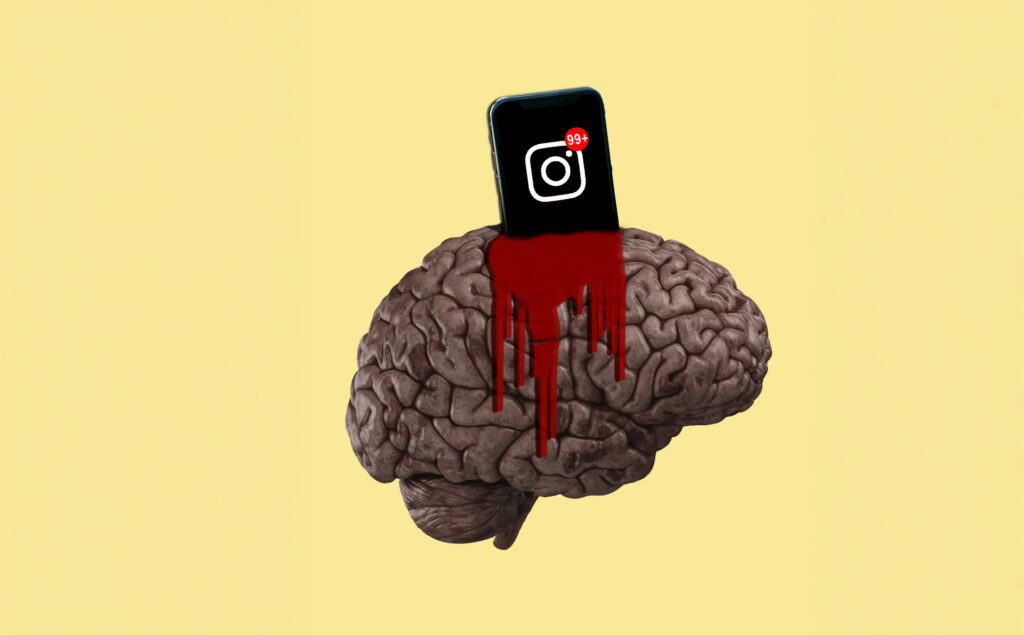
Social media is currently going through the same process that the nicotine industry faced three decades ago: leaked internal documents reveal that companies knew about the harms of their products, coalitions of state prosecutors filing massive lawsuits, and governments promoting age limits and warning labels.
The comparison is not exaggerated. In February 2026, Frances Haugen (the former employee who leaked thousands of internal Meta documents) told CNN that the company itself was comparing itself internally to Big Tobacco while neglecting child harm.
Documents submitted in the ongoing trial in Los Angeles against Meta and YouTube include internal communications where employees wrote, “IG is a drug. We are basically distributors.”
The science behind digital dependency
By: Gabriel E. Levy B.
Two years ago, touring the Guadalajara Book Fair, I came across a title that caught my attention: “Dopamine”, written by Daniel Z. Lieberman and Michael E. Long, it is the bible of human and animal behavior under the effects of this neurotransmitter. The book is a text that allowed me to better understand how we react to this substance and how it defines our personality, but, above all, how the big industries not only of liquor, casinos and nicotine, but also those of Social Media, exploit our brains to achieve greater profits to the detriment of public health.
After reading this book, I decided to gradually withdraw from all social media progressively, looking for a detox of my brain. Since I was a child my philosophy of life has been to avoid falling into any “Vice”, I am very afraid of being a slave to substances and for this reason I do not consume alcohol, drugs, or coffee, I even avoid sodas with caffeine and therefore the only way to be consistent with my lifestyle was to also abandon social media, which I only use on occasion, to share some of my writings, perhaps so that my distant followers know my work and realize that I continue to publish, but I don’t even do it periodically.
And I am not paranoid, on the contrary, I seek that the greatest number of decisions I make in my life (of course it is an ideal that I do not always achieve), are under the Cartesian method, seeking to interpose reason to emotion, and it is for this reason, that I can assure that the evidence on the addictive mechanisms of social networks: It is not anecdotal.
In 2012, researchers Diana Tamir and Jason Mitchell, from the Harvard Department of Psychology, published in the Proceedings of the National Academy of Sciencesthat: “talking about oneself on social networks activates the same regions of the mesolimbic dopaminergic system (the nucleus accumbens and the ventral tegmental area) that are activated by food, money and sex.”
In 2016, a UCLA team led by Lauren Sherman subjected 32 teenagers to functional MRI scans while they pretended to use Instagram: looking at their own photos with many “likes” intensely activated the nucleus accumbens, the same brain nucleus that responds to chocolate, money or drugs.
The connection to substance addiction is direct.
Dr. Dar Meshi, from Michigan State University, published in 2019 in the Journal of Behavioral Addictions that: “intensive users of social networks show the same impairment in decision-making (measured with the Iowa Gambling Task) as people addicted to opioids, cocaine and methamphetamine.”
For her part, Dr. Anna Lembke, Professor of Psychiatry at Stanford and author of Dopamine Nation (2021), summarized it very eloquently: “The smartphone is the contemporary hypodermic needle, which supplies digital dopamine for a connected generation.”
A three-year longitudinal study published in JAMA Pediatrics in January 2023, led by Eva Telzer and Maria Maza of the University of North Carolina at Chapel Hill with 169 adolescents, showed that those who regularly checked social media developed a different neurodevelopmental trajectory, with progressive hypersensitivity to social feedback.
None of this is fortuitous.
Aza Raskin, who created infinite scroll in 2006, publicly stated in 2019 that his invention wastes the equivalent of 200,000 human lives every day and described the design techniques as “behavioral cocaine scattered throughout the interface.”
Tristan Harris, Google’s design lead and co-founder of the Center for Humane Technology, coined the term “race to the bottom of the brainstem” to describe the competition between platforms to capture attention through variable-ratio reinforcement — the same mechanism as slot machines.
When companies know and remain silent
On October 5, 2021, Frances Haugen testified before the U.S. Senate Subcommittee on Consumer Protection, chaired by Senator Richard Blumenthal.
It revealed that internal Facebook research, conducted in 2019, showed that 32% of teenage girls felt that Instagram deteriorated their body image, that 13% of teens in the UK linked their suicidal thoughts to the platform, and that teens themselves described its use with what internal researchers called an “addict narrative”.
Facebook knew about this data and hid it from the public and Congress.
“Facebook’s platforms: harm children, stoke division, and weaken our democracy.”
The scandal unleashed by Haugen, which has shaken all of Silicon Valley, is not limited to a series of reckless statements, but has been accompanied by concrete evidence, which the former official leaked, through a series of internal documents, which the press has called “Facebook Papers” and which highlight the lack of ethics of Mark Zuckerberg’s company and which even led the former official to conclude that: “Facebook is morally bankrupt.”
“Profits over people”
The former Facebook official, in a subsequent statement with CBS News, revealed how she shared several internal Facebook documents with The Wall Street Journal and assured that “The company has repeatedly chosen to put profits above the mental health of its users, including teenage girls who use social media platforms.”
“The company’s executives know how to make Facebook and Instagram safer, but they won’t make the necessary changes, because they’ve put their astronomical profits before people…
… We must act now.”
The concern that Democrats and Republicans agree on
While the criticism of the former Facebook executive resonated very strongly on Capitol Hill, they were not the only ones, as several senators joined the criticism and proposed immediate regulatory action:
“The damage to self-interest and self-esteem inflicted by Facebook today will haunt a generation,” said Democratic Sen. Richard Blumenthal.
Marsha Blackburn, a Republican senator from Tennessee, said the company
“It’s not interested in making significant changes to improve children’s safety on its platforms, at least not when that would result in losing eyes on posts or decreasing its ad revenue[17]«.
Two years later, on November 7, 2023, Arturo Béjar (Meta’s former director of engineering) testified before the same committee and revealed that: “one in eight Instagram users aged 13 to 15 had received unwanted sexual advances in a span of just seven days.”
Béjar denounced that the security features that Meta publicly presented were “a placebo, a security feature in name only to reassure the press and regulators.”
But it was Tim Kendall, Facebook’s former director of monetization, who drew the most explicit comparison.
In his testimony before the House of Representatives in September 2020, he stated, “We took the Big Tobacco playbook, working to make our product addictive from the ground up.
Tobacco companies first sought to make nicotine stronger. Then they added sugar and menthol so you could keep the smoke longer. On Facebook, we incorporate status updates, photo tags and likes.”
The Tobacco Papers and their digital reflection
The parallelism has deep historical roots.
In 1963, a Brown & Williamson executive wrote in an internal memo: “Nicotine is addictive. We are, then, in the business of selling nicotine, an addictive substance.”
In 1994, the seven CEOs of major tobacco companies testified under oath before Congress that nicotine was not addictive.
The leak of more than 14 million internal documents (now archived in the UCSF Truth Tobacco Industry Documents Library) showed that companies knew since the 1950s that smoking caused cancer and deliberately manipulated nicotine to increase addiction. Jeffrey Wigand, vice president of research at Brown & Williamson, revealed on CBS’s 60 Minutes in February 1996 that the company added ammonia to tobacco nicotine to enhance its effect on the brain.
The result was the Master Settlement Agreement of November 1998: $206 billion paid by Philip Morris, R.J. Reynolds, Brown & Williamson and Lorillard to 46 states.
Advertising aimed at minors, animated characters in campaigns and internal documents were forced to be disclosed.
Senator Blumenthal stated after Haugen’s testimony:
“Facebook has taken the Big Tobacco playbook: it has hidden its own research on addiction and the harmful effects of its products.” His colleague Ed Markey was more graphic: “Instagram is that first drug of childhood, designed to catch teenagers early.”
Lawsuits against Silicon Valley giants
The litigation in federal court in Oakland, California, accumulates 2,325 lawsuits against Meta, Google, Snap and ByteDance as of February 2026.
Meanwhile, in October 2023, a bipartisan coalition of 42 attorneys general sued Meta for designing addictive products for minors, even in a way that is not paradoxical but predictable, the same law firms that litigated against the 7 CEOs of Nicotine (Motley Rice and Lieff Cabraser) are the ones leading the cases.
On the other side of the Atlantic, in Europe, the European Commission is investigating TikTok and Meta under the Digital Services Act, with potential fines of up to 6% of their global revenues (about 9,900 million dollars for Meta and 9,300 million for TikTok).
In the United Kingdom, sanctions have not been long in coming, for example, Ireland imposed sanctions of 405 million euros on Instagram in 2022 and 345 million on TikTok in 2023.
The legislative response seems to replicate the pattern of Nicotine.
As usual, the Australian parliament, ahead of the rest of global legislation, approved in November 2024 the ban on social networks for children under 16 years of age, with fines of up to 49.5 million Australian dollars for platforms.
In June 2024, Surgeon General Vivek Murthy asked Congress to establish warning labels on social media, exactly as was done with the nicotine industry in 1965.
Colorado became the first state to pass such warnings in 2024; Minnesota and New York followed in 2025.
France approved a ban on social media for children under 15 in January 2026. Spain is processing a law that raises the age of independent access to 16 years.
History repeats itself, but with greater speed
The trajectory is unmistakable: from scientific evidence to internal documents, from whistleblower testimonies to attorney general lawsuits, the social media industry is walking the same path as the tobacco industry. L
Except this time there is a precedent.
Attorney Matt Bergman, who represents more than 1,200 families against these platforms, sums it up like this: “When Frances Haugen testified before Congress, I understood that this was asbestos again.” The question is no longer whether there will be regulation, but how much it will cost (in money and damage to a generation) to delay in implementing it.
In conclusion: everything seems to indicate that what began as an innovative and disruptive social medium, to connect people and have them closer, is actually a dangerous drug that alters the brain’s reward system, becoming one of the worst regulatory headaches that authorities around the world have ever faced. Not only because of the obvious lack of ethics, but also because, as has been demonstrated, humanity depends socially and economically, at alarming levels, on its services, which necessarily forces governments, the media and social organizations to promote legislation that puts a limit on this drug that is destroying the brains of an entire generation.
References
Béjar, A. (2023, November 7). Testimony before the U.S. Senate Subcommittee on Commerce, Science, and Transportation. United States Congress.
Colorado Attorney General. (2023). Bipartisan coalition of attorneys general file lawsuits against Meta for harming youth mental health through its social media platforms. Colorado Attorney General’s Office.
Data Protection Commission. (2022, September 15). Data Protection Commission announces decision in Instagram inquiry. Irish Data Protection Commission.
Data Protection Commission. (2023). DPC issues 345 million euro TikTok children’s privacy fine. Irish Data Protection Commission.
European Parliament & Council of the European Union. (2022). Regulation (EU) 2022/2065 on a single market for digital services (Digital Services Act). Official Journal of the European Union.
Haugen, F. (2021, October 5). Testimony before the U.S. Senate Subcommittee on Consumer Protection and Product Safety. United States Congress.
Kendall, T. (2020, September). Testimony before the U.S. House of Representatives Subcommittee on Communications and Technology. Congress of the United States.
Lembke, A. (2021). Dopamine nation: Finding balance in the age of indulgence. Dutton.
Meshi, D., & Elizarova, A. (2019). Excessive social media users demonstrate impaired decision making in the Iowa Gambling Task. Journal of Behavioral Addictions, 8(1), 169–173. https://doi.org/10.1556/2006.7.2018.138
Meza, M. A., & Telzer, E. H. (2023). Association of habitual checking behaviors on social media with longitudinal functional brain development. JAMA Pediatrics, 177(2), 160–167. https://doi.org/10.1001/jamapediatrics.2022.4805
Motley Rice LLC & Lieff Cabraser, Heimann & Bernstein LLP. (2022). In re: Social media adolescent addiction/personal injury products liability litigation, MDL No. 3047. Federal District Court for the Northern District of California.
Murthy, V. H. (2024, June). Surgeon General Advisory: Social media and youth mental health. Office of the U.S. Surgeon General.
New York State Attorney General. (2023). Attorney General James and multistate coalition sue Meta for harming youth. New York Attorney General’s Office.
Parliament of Australia. (2024). Online Safety Amendment (Social Media Minimum Age) Act 2024. Government of Australia.
Sherman, L. E., Payton, A. A., Hernandez, L. M., Greenfield, P. M., & Dapretto, M. (2016). The power of the like in adolescence: Effects of peer influence on neural and behavioral responses to social media. Psychological Science, 27(7), 1027–1035. https://doi.org/10.1177/0956797616645673
Tamir, D. I., & Mitchell, J. P. (2012). Disclosing information about the self is intrinsically rewarding. Proceedings of the National Academy of Sciences, 109(21), 8038–8043. https://doi.org/10.1073/pnas.1202129109
Truth Initiative. (2019). The Master Settlement Agreement: 4 ways the landmark tobacco settlement changed tobacco control. Truth Initiative Foundation.
University of California, San Francisco. (n.d.). Truth Tobacco Industry Documents Library. UCSF Library. https://www.industrydocuments.ucsf.edu/tobacco/
Wall Street Journal. (2021, September). The Facebook Files [Investigative Series]. The Wall Street Journal.